Commercial Stairs & Handrails
We fabricate commercial stair, handrail, and guardrail systems designed to meet code requirements, architectural specifications, and site conditions.
-
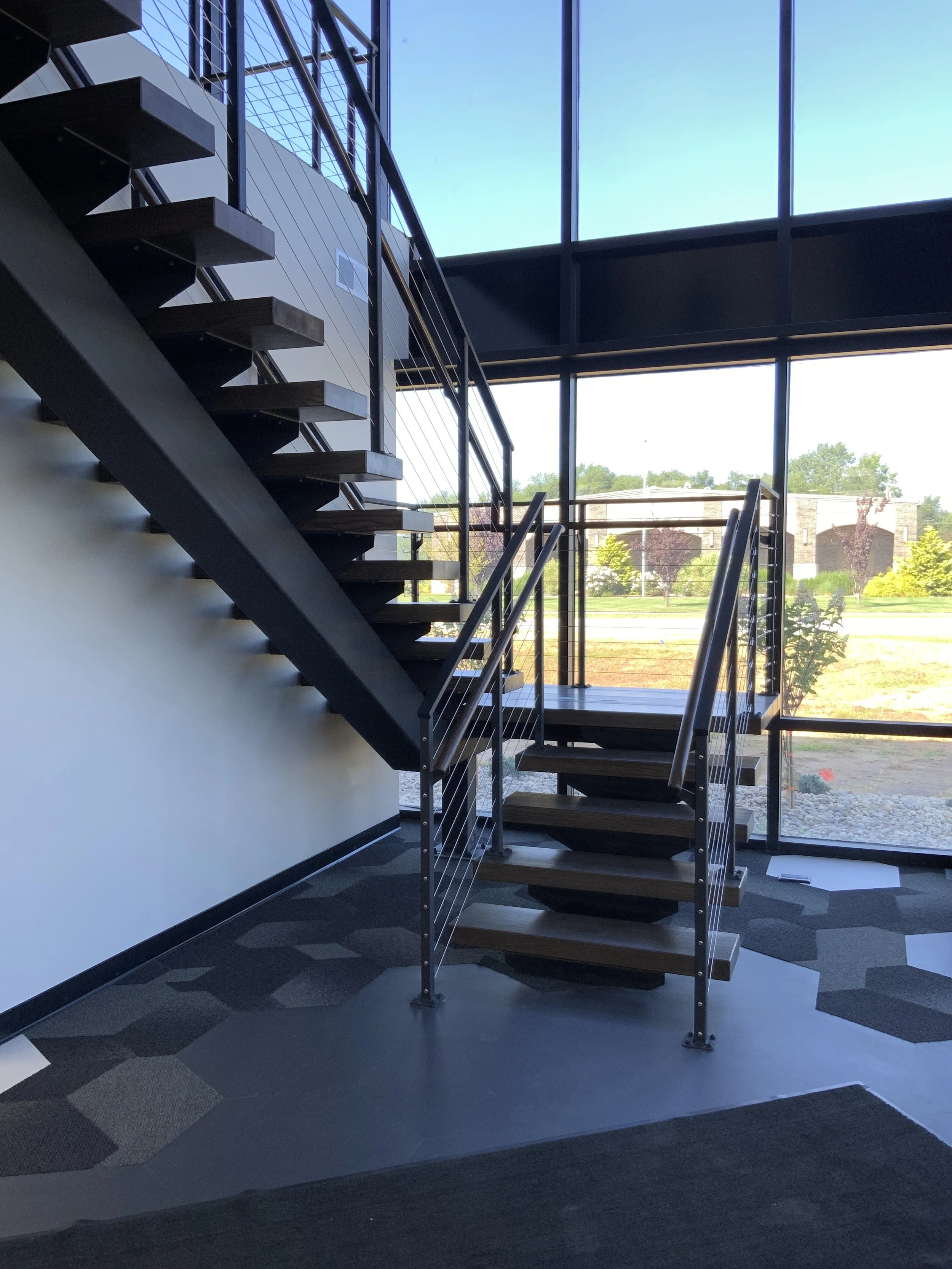
![Interior stair with custom metal railing and wood treads.]()
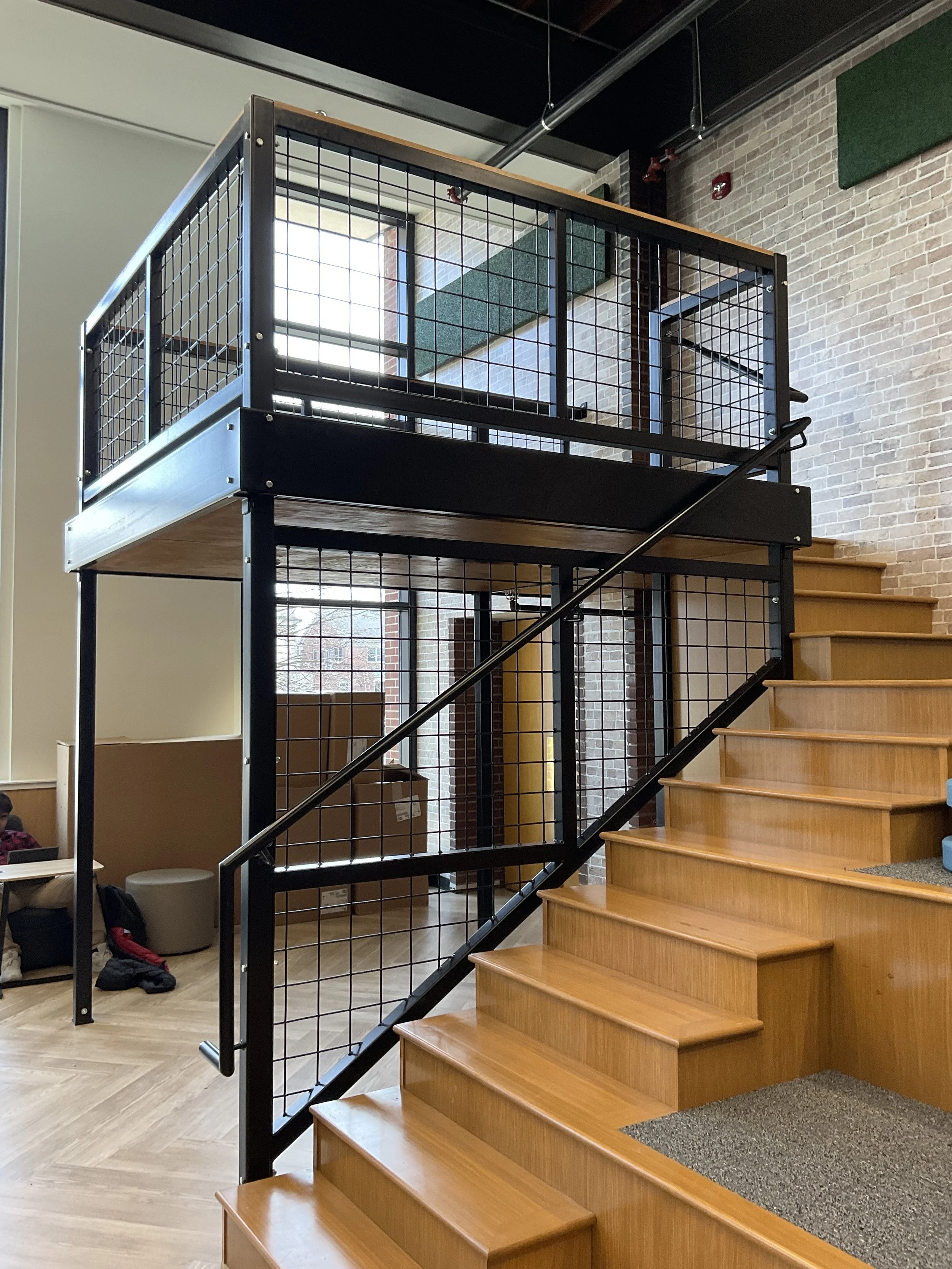
Interior architectural steel stair with mesh guardrail system
-
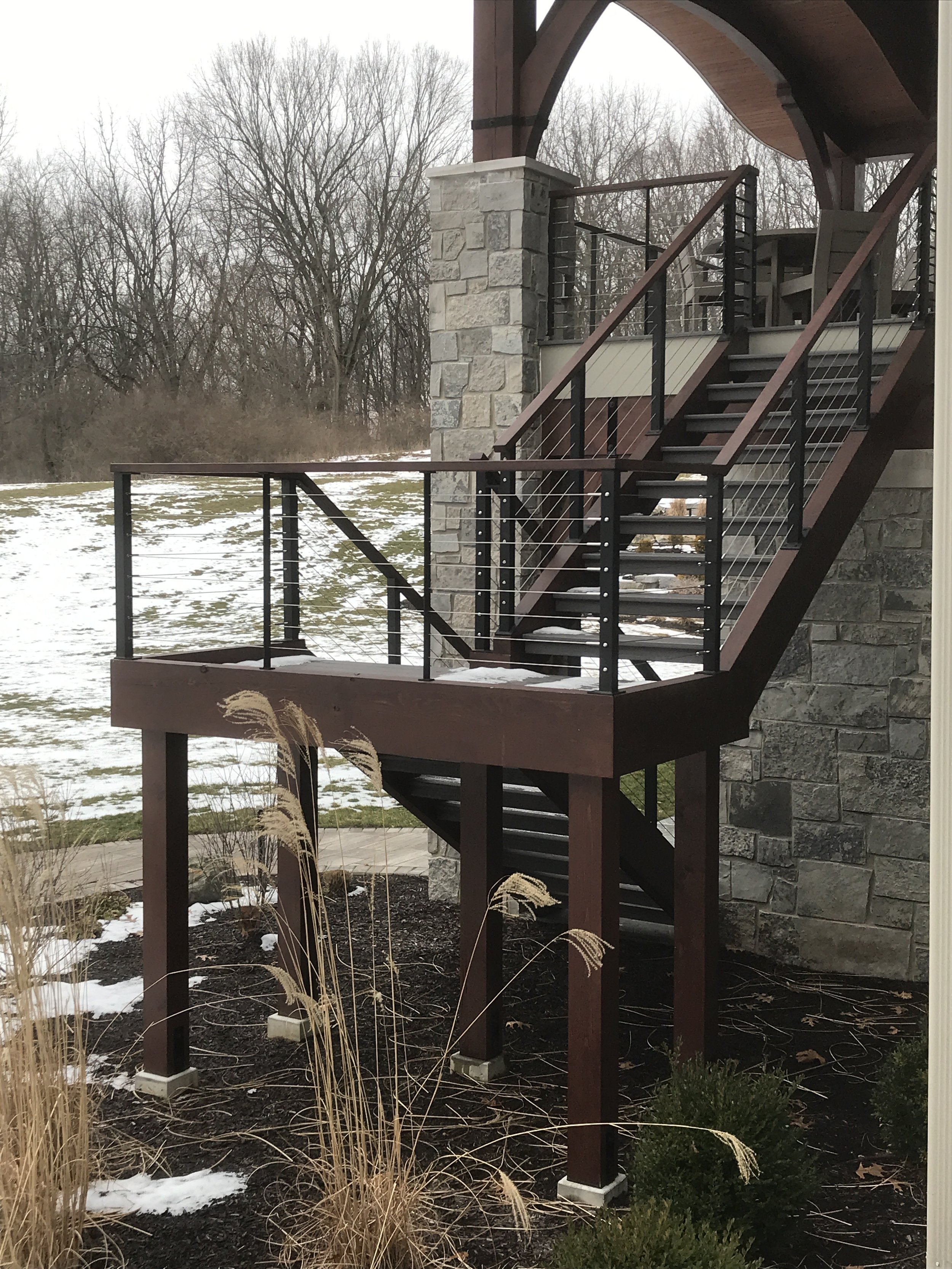
![Exterior residential stair with custom metal railing.]()
Exterior Steel egress stair with integrated guardrail system
-
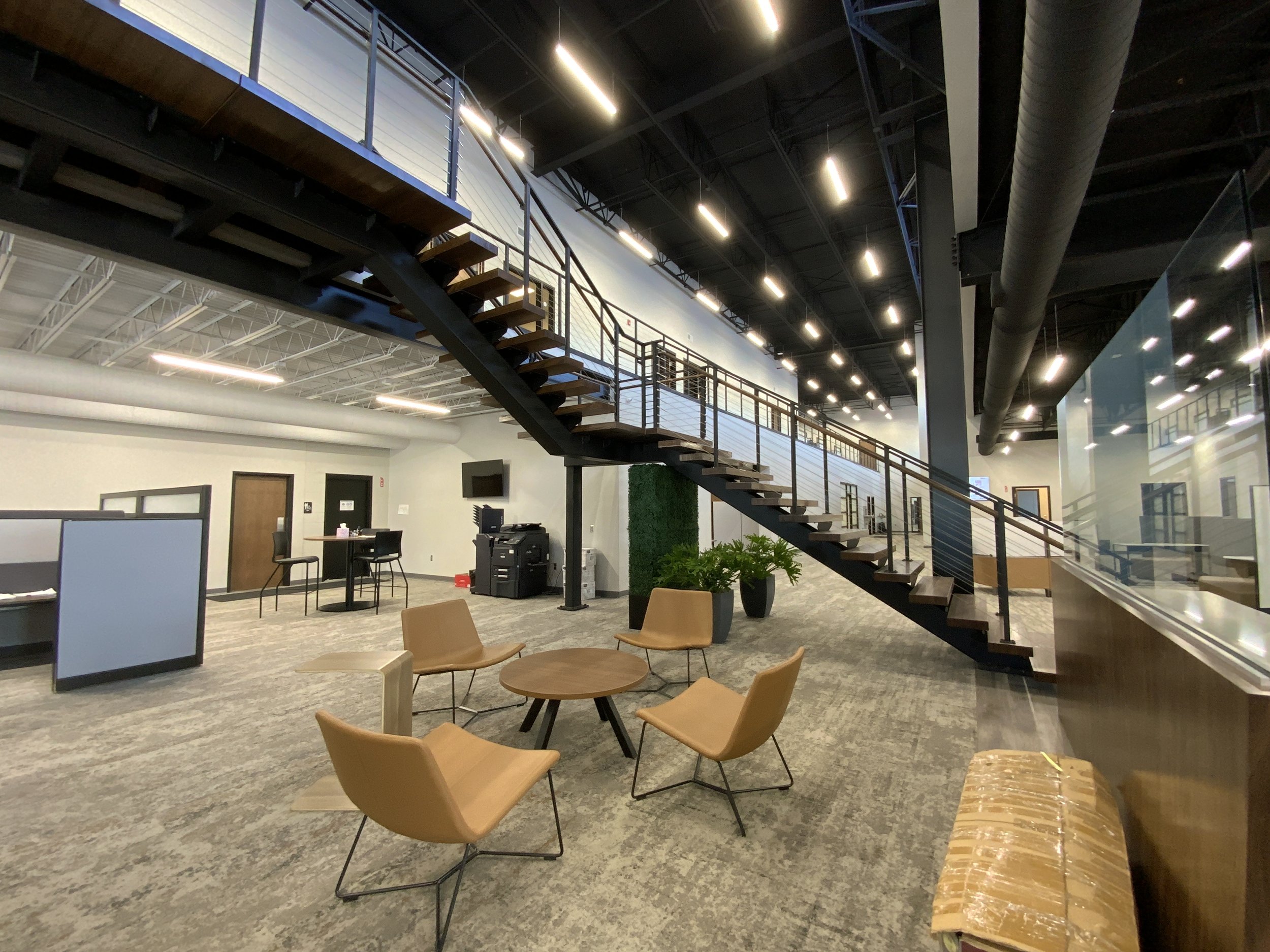
![Modern interior stair with custom metal railing.]()
Multi-story interior steel stair with integrated cable rail system
-
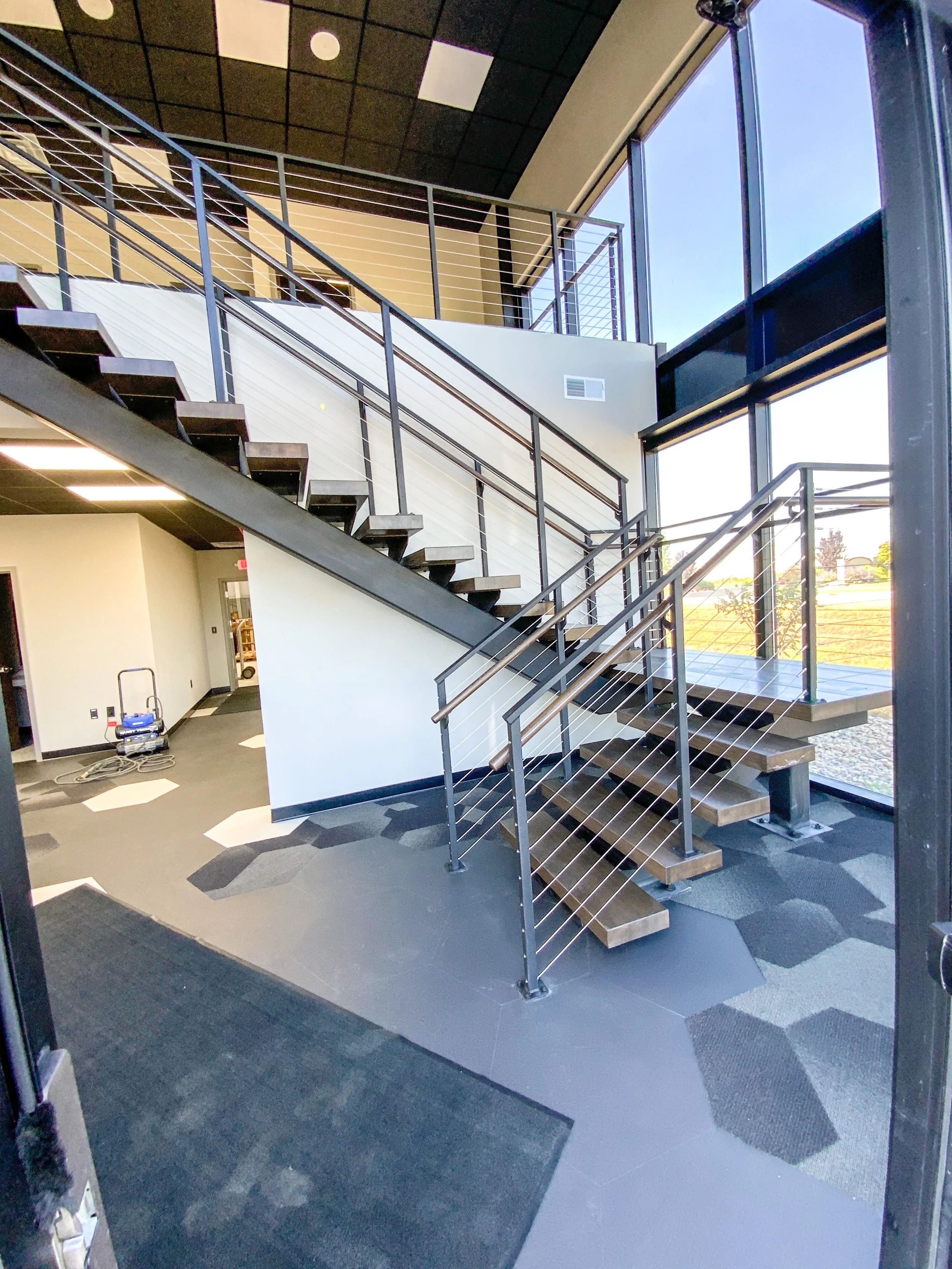
![Interior stairway with metal handrails and wood steps.]()
open-rise interior stair with cable rail guardrail
-
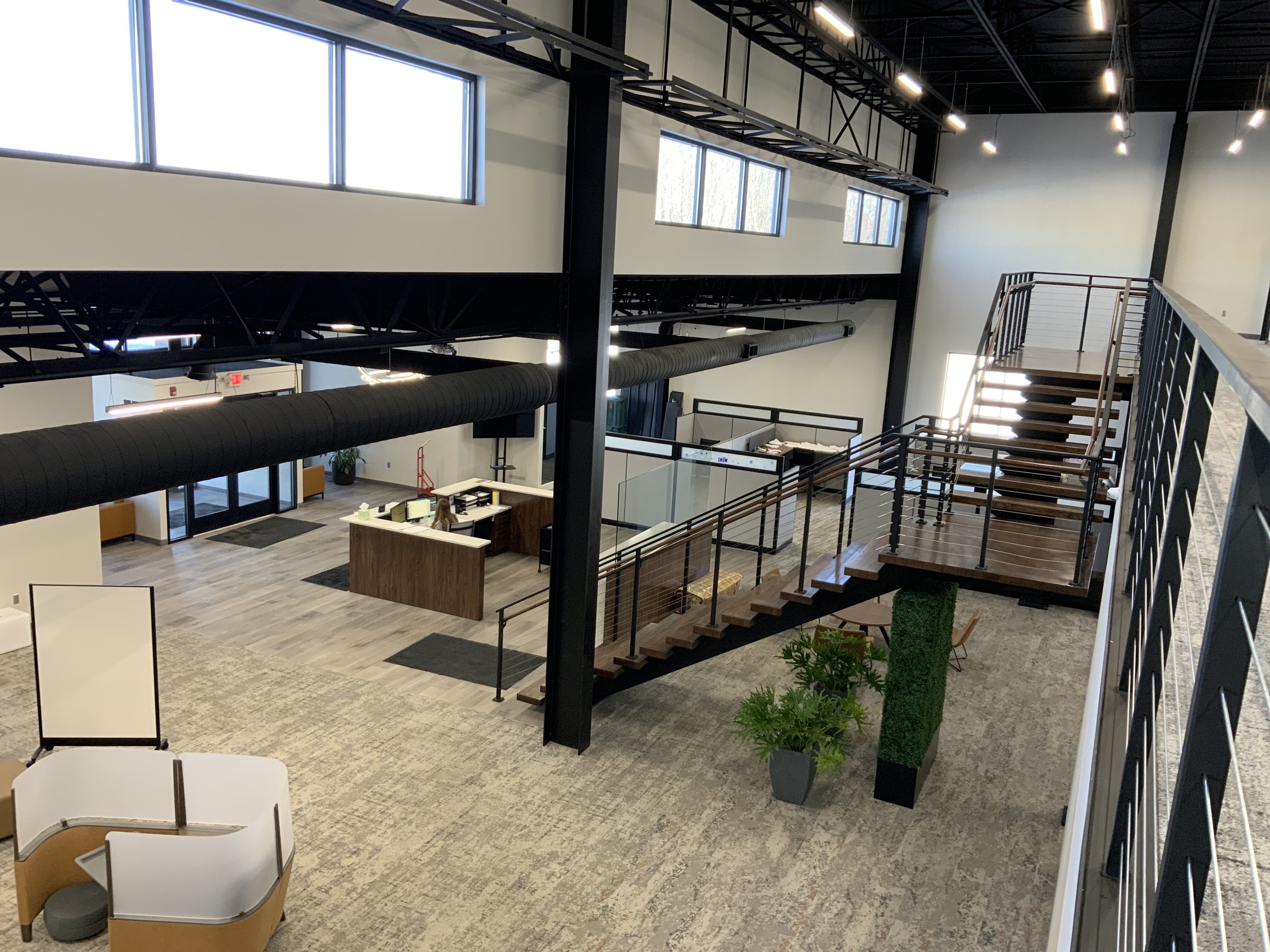
![Interior office stair with custom metal railing.]()
interior stair and mezzanine guardrail system with cable rail infill
-
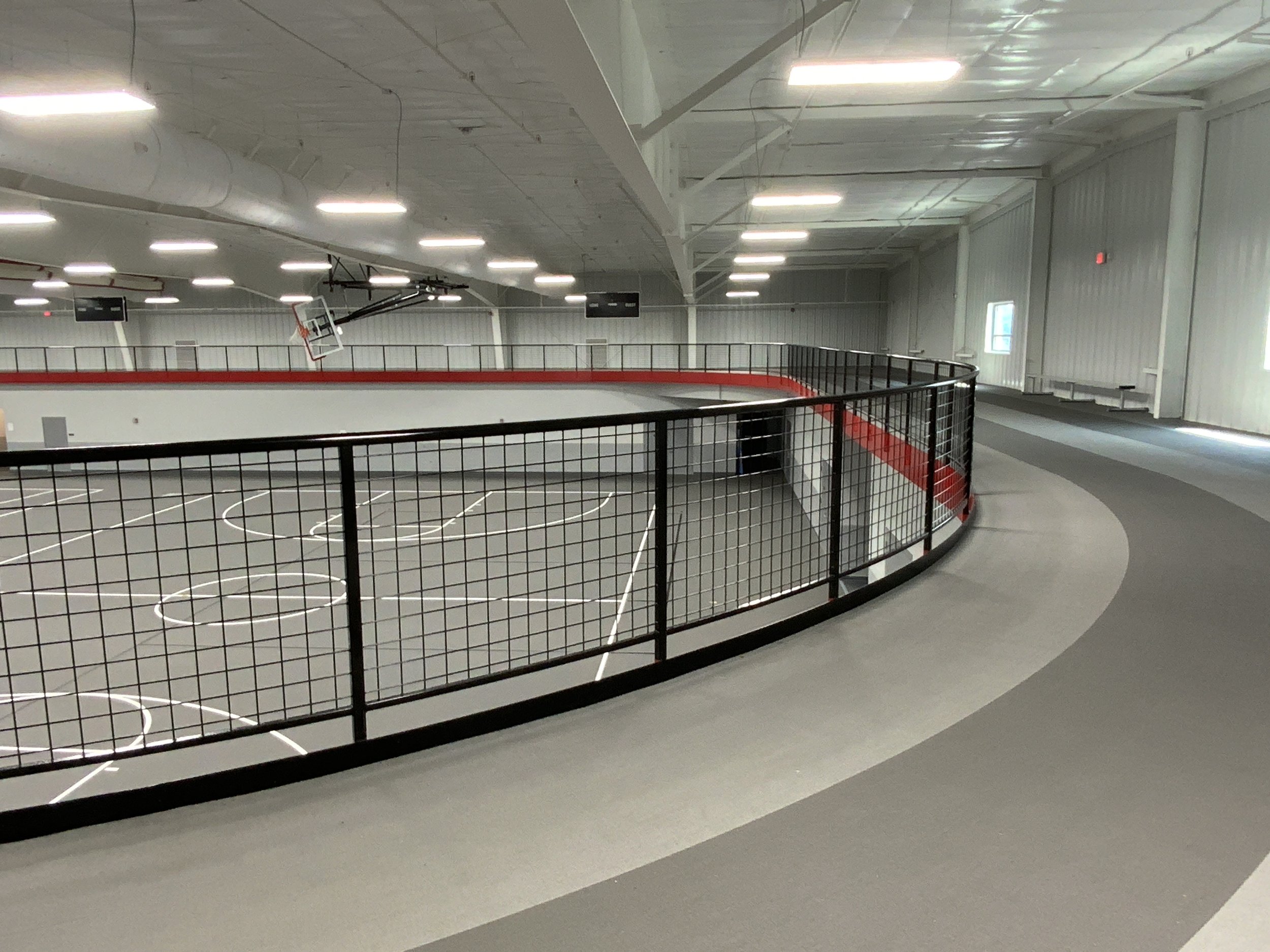
![Interior guardrail system fabricated for indoor athletic facility.]()
interior guardrail system with mesh infill for elevated walking surfaces
-
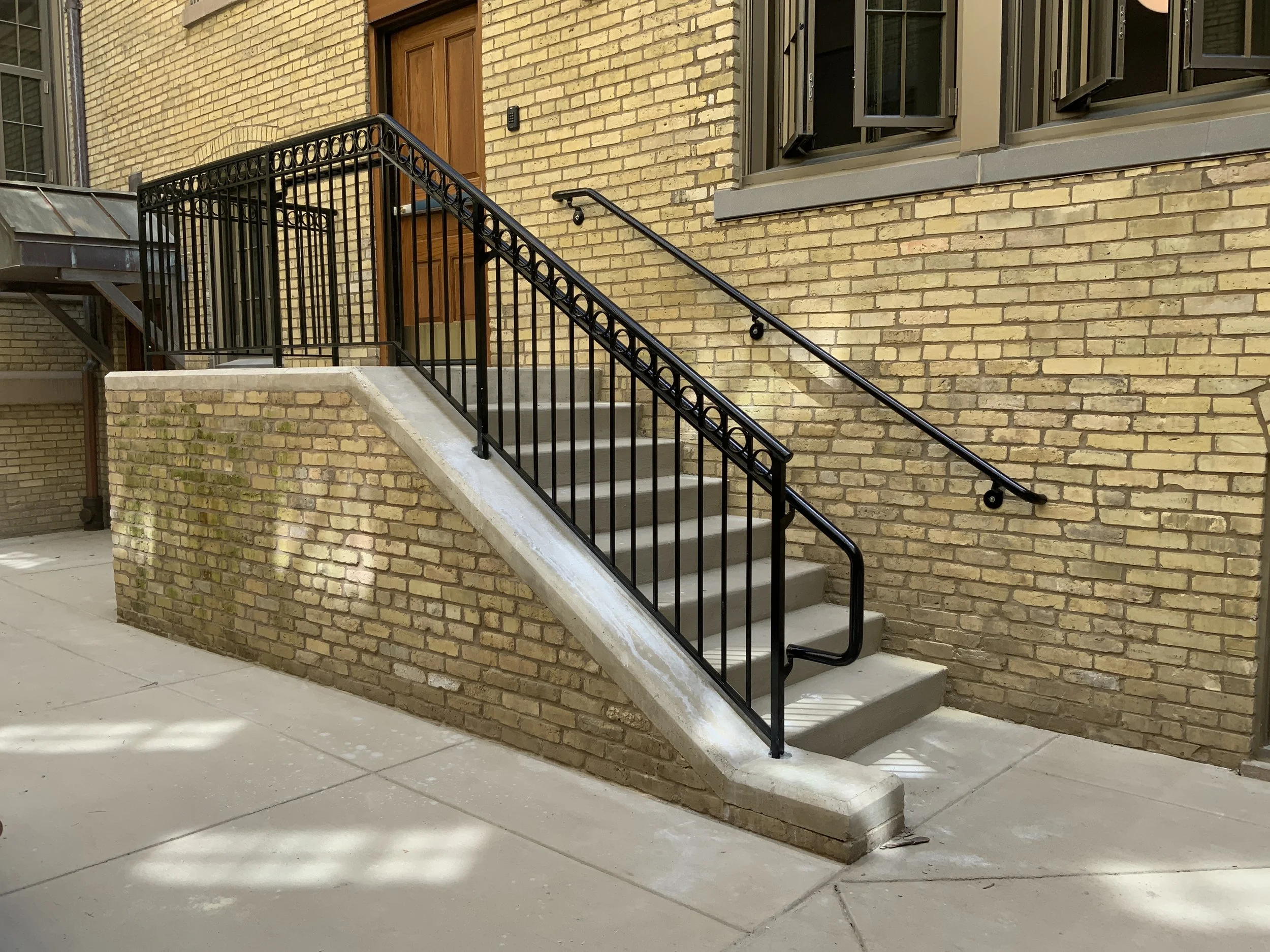
![Exterior stair and accessibility ramp with custom metal railings.]()
exterior entry stair and handrail system for commercial building access
typical services
Interior and Exterior Commercial Stair Systems
Integrated Stair, Handrail, and Guardrail Assemblies
Cable Rail and Architectural Railing Systems
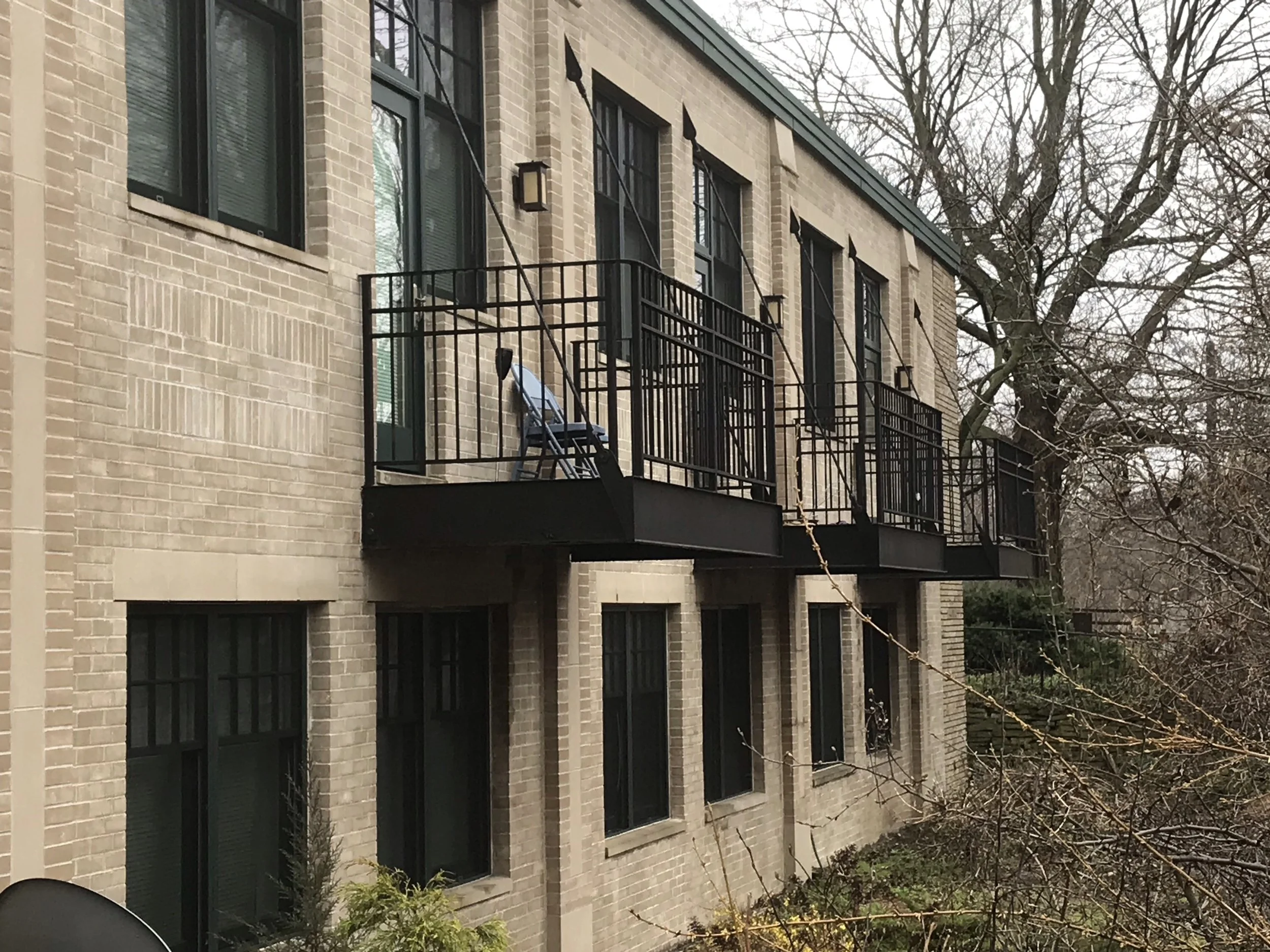
Balcony and Terrace Railing Systems for Multi-Story Buildings
Code-Compliant Egress Stairs Coordinated with Other Trades
Typical Clients
General Contractors
Commercial Builders and Developers
Architects and Design Firms
Property Owners and Facility Managers
Educational, Healthcare, and Municipal Facilities
Other Fabricators Seeking Specialty Fabrication Support or Additional Production Capacity
-
Basney Honda
Jordan Ford
Team Toyota
LeValley Chevrolet
Wimbery Chevrolet
1st Source Bank
Lake City Bank
Wells Fargo Bank
McDonald’s
Culver’s (Coldwater)
Menards
Walmart
Walgreens
City of Goshen
Elkhart Public Library
AutoZone
City Auto
Collision Center
Elkhart Auto Trades
Instant Auto
Performance Auto
RV Hall of Fame Auto
Tom Naquin
Tyler Honda
Café Navarre
CC’s Pizza
Chalet Party Store
Drive & Shine
Granite City
Hacienda
Mongolian Grill
Noodles & Company
Pizza Hut
Sur La Table
Area Agency on Aging
Chesterton Health Care
Dowagiac Nursing Hospital
Elkhart Medical Center
Fort Wayne Health & Rehab
Greencroft Senior Living Center
Healthwin Improvements
Heart City Medical
Skilled Nursing Homes
Albion Elementary School
Andrews University
Benton Harbor Area Schools
Berrien Springs Public Schools
Bridges School
Brown School
Career Academy
Central Middle School
Charter Schools
Clarke School
Duncan Hall
Elkhart Community Schools
Grace Baptist School
Knox High School
Lincoln School
Morton School
Niles Community Schools
North Side Middle School
Pierre Moran School
Pinewood School
Sam Adams Elementary School
St. Joseph High School
WNIT Career Center
Materials & Finishes
We build stair and railing systems to match the environment, code requirements, and design intent - whether the priority is durability, corrosion resistance, or a clean architectural look. Material and finish selections are typically guided by project specifications and industry finish standards.
Materials:
-
Best for: Most interior commercial stair and railing systems, projects intended to be primed, painted, or powder coated.
Why choose it: Highly versatile, cost-effective, and ideal for custom fabrication, welded connections, and field coordination.
What it’s used for: Stair stringers, landing frames, guardrails, handrails, posts, brackets, miscellaneous supports.
Note: Requires a protective finish—especially in wet, exterior, or high-traffic conditions. Common Grades used in stair and Rail Fabrications: ASTM A36 - plate, angles, bars, brackets ASTM A992 - wide-flange beams and primary structural members ASTM A53 - pipe handrails and posts ASTM A500 (Grades B/C) - HSS posts and rail framing ASTM A588 - weathering steel (exterior architectural applications) -
Best for: High-visibility architectural areas, corrosive or coastal environments, frequently cleaned locations, and long-term durability.
Why choose it: Clean appearance, excellent corrosion resistance, and minimal maintenance over time.
Common finishes: Brushed/satin, mill, or polished as specified. Common grades used for stairs and railings: 304 / 304L - interior and general-purpose architectural applications 316 / 316L - exterior, coastal, or high-corrosion environments ASTM A554 - stainless steel tubing for handrails and guardrails -
Best for: Exterior stairs, guardrails, and handrails where corrosion resistance and lighter weight are beneficial.
Why choose it: Naturally corrosion resistant; well-suited for architectural railing systems and often paired with powder coating for uniform color and durability. Common alloys used for stair and rail systems: 6061-T6 - structural components, stringers, heavy framing 6063-T5 / T6 - architectural railings, posts, and extrusions 5052-H32 - sheet and plate components
Final material selection is based on project requirements, environment, and governing specifications.
stair components and options:
-
Bar Grating Treads – Durable and drainage-friendly; common in industrial and service applications
Pan-Filled Treads – Used when a solid walking surface is required; typically specified with concrete or epoxy fill
Plate / Checkered Plate Treads – Solid steel or aluminum tread plate, often paired with anti-slip treatments
Slip-Resistant and Safety Tread Options - Abrasive nosings, serrated edges, or retrofit safety tread systems for enhanced traction
Retrofit and Specialty Solutions – Designed for existing stairs or unique project requirements
-
Straight-run stairs
Switchback stairs with landings
Crossover Stairs - Industrial stair systems crossing over equipment, piping, or conveyors
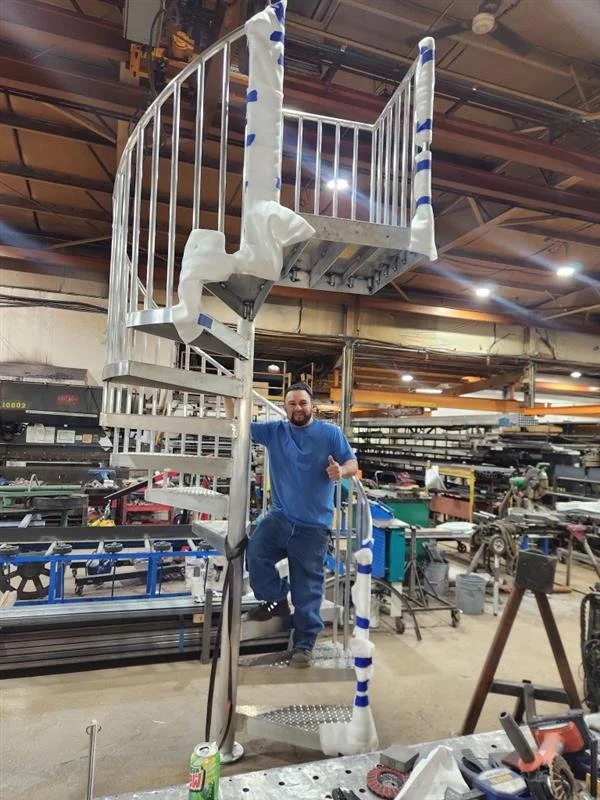
Curved / Helical Stairs - Architectural feature stairs for high-visibility or statement spaces
Alternating Tread Stairs (ATS) - Code-approved, space-saving stair systems for limited-access and maintenance applications
-
Handrails - Graspable rail designed for support, typically mounted at 34”-38” above stair nosings
Guardrails - Fall-protection systems at open edges and landings, typically 36”-42” high depending on application
Integrated Systems - Many projects require guardrails with integrated handrails to meet both safety and code requirements
Rail Styles & Infill Options:
-
Round Pipe Rail - Common, durable, and comfortable for grasping; widely used in commercial and industrial settings
Square / Rectangular Rail - Clean, modern architectural appearance
Flat Bar or Custom Cap Rail - Minimal profiles or custom detailing where specified
Wall - Mounted Rails - Corridor and stairwell applications; round or shaped profiles to meet graspability requirements
-
Best For - Cost-effective guardrails where visibility through the rail is desired.
Vertical Picket Layouts
Spacing designed to meet code requirements
Suitable for stairs, landings, and elevated walking surfaces
-
Best For - Schools, public spaces, industrial facilities, and areas requiring tighter infill for safety or code compliance.
Wire Mesh / Expanded Metal - Durable, secure infill with visibility and airflow
Perforated Metal Panels - Clean, uniform appearance with customizable patterns
Solid Plate Panels - Maximum containment with a solid architectural look
-
Cable Rail Systems - Open, modern appearance commonly used in commercial and architectural applications
Glass Panel Railings - High-visibility architectural systems using laminated or tempered glass
-
Custom infill panels and specialty rail details are available based on project requirements, architectural intent, and governing specifications.
Finish Systems:
-
What it is - A temporary protective primer applied after fabrication to reduce surface rust during handling, shipping, and installation. Surface preparation levels are commonly referenced per SSPC standards. Important To Note - Shop primer is not intended as a final finish unless specifically noted in the project specifications.
Best For - Interior work or projects where final paint or coating is applied in the field or at a later stage. -
What It Is - Applied coating systems using industrial and architectural liquid paints, including epoxy and polyurethane systems, based on project requirements. Used For:
Final Finished Coats
Multi-coat systems (primer + intermediate + topcoat)
Applications requiring specific film thickness, durability, or chemical resistance
-
What It Is - Zinc-coated corrosion protection applied through the hot-dip galvanizing process in accordance with ASTM A123 (fabricated steel) and ASTM A153 (hardware).
Best For - Exterior stairs and rails, harsh environments, and long-term corrosion resistance. Appearance Note - Hot-dip galvanizing provides excellent protection but results in a non-uniform, industrial appearance and is not intended for tight architectural finish expectations. -
What It Is - A baked-on coating system used for consistent color, durability, and a refined architectural finish. Key Considerations:
Color selections are typically based on RAL standard colors
Specialty or custom colors may be limited
Metallic powders often require a clear coat for uniform appearance and durability
-
What It Is - No applied coating; appearance reflects the base metal condition. Typically Used for:
Stainless Steel
Aluminum
Temporary conditions prior to final finishing
Note - For carbon steel, leaving material uncoated will result in oxidation over time.
-
Available Finishes Include:
Longitudinal satin finishes
Circumferential satin finishes
Polished finishes when specified
Final Process - Stainless components may be passivated after fabrication to remove surface contaminants and enhance corrosion resistance.
Fabrication & Installation
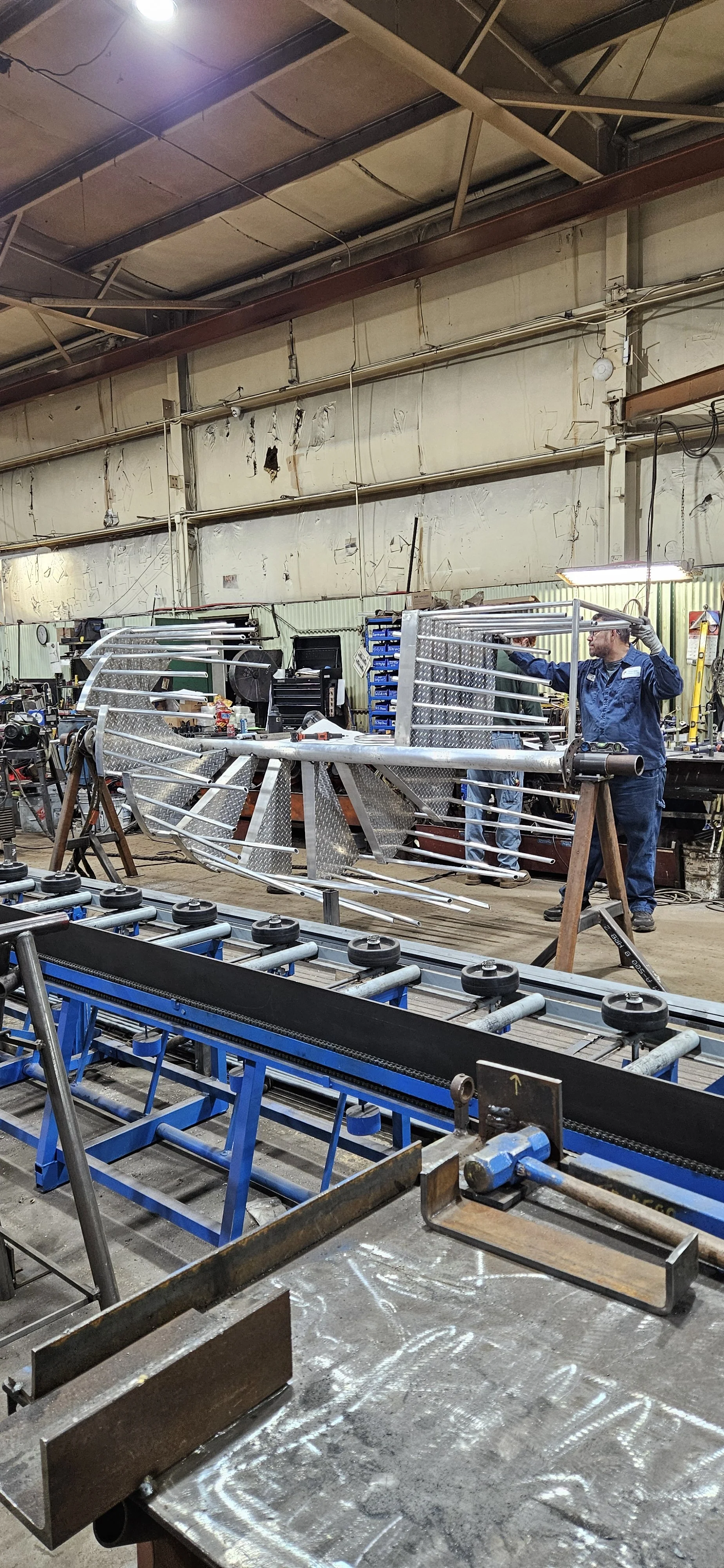
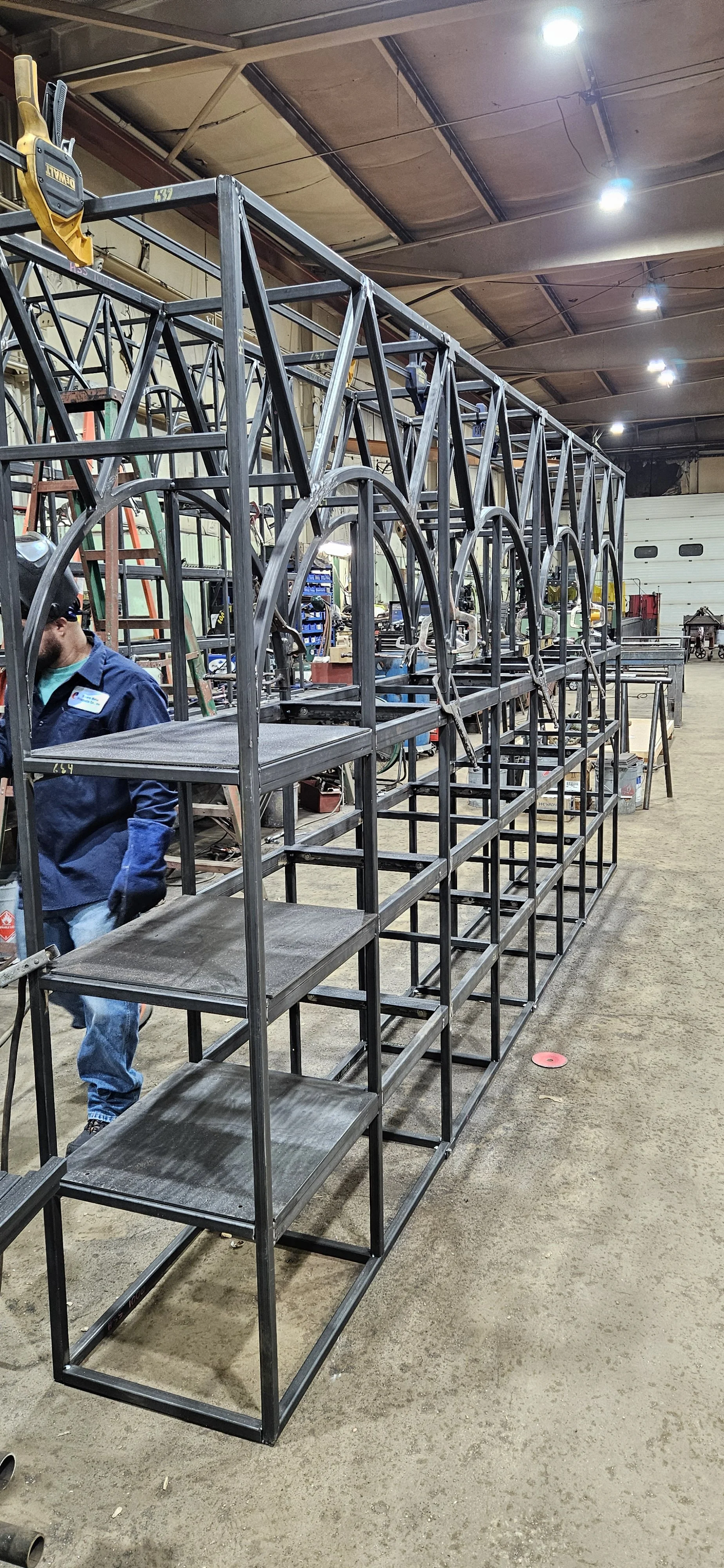
All commercial stair and handrail systems are fabricated in-house and coordinated to ensure proper fit, code compliance, and efficient installation while meeting applicable building codes and project specifications. We coordinate field dimensions, site conditions, and installation sequencing with general contractors and other trades. We offer installation on all material we fabricate.